With reporting for this year’s SB 253 CARB submittal in the final stretch, our team is already looking ahead to the 2027 reporting requirements. In 2026, CARB gave reporters a significant amount of flexibility in how they report their emissions but in 2027, that will change significantly. Verification will shift from optional to required, Scope 3 emissions will be included in reporting, and the number of data points included in the 2027 submissions will expand greatly.
In the face of these significant changes, many companies are asking whether their teams are ready for the expanded reporting. Have no fear! This article is designed as a roadmap to help ensure your disclosure is verification-ready, with the intent to avoid any last minute scrambling.
Use the steps below to pressure-test your reporting process before verification begins.
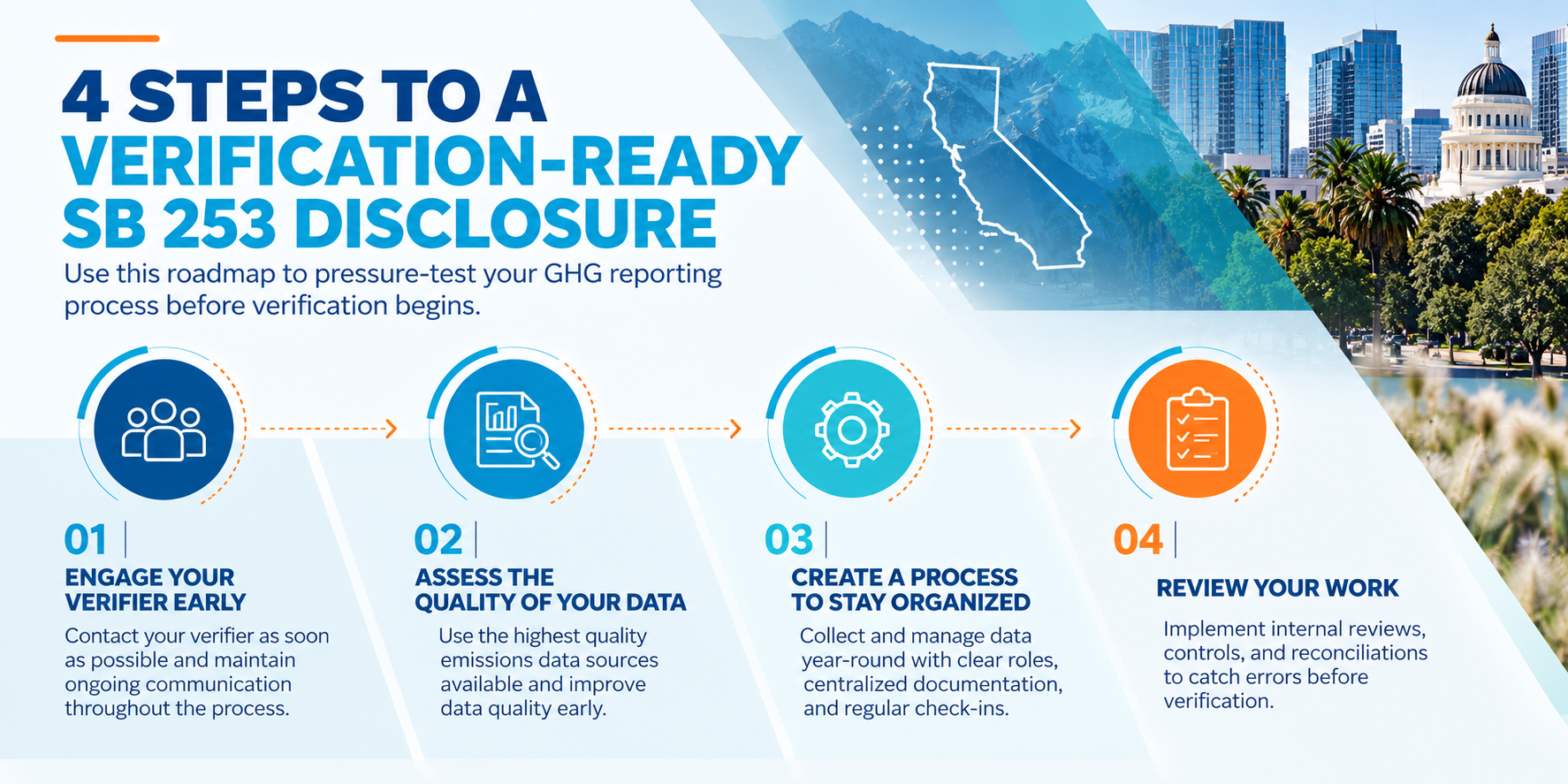
Step 1: Engage Your GHG Emissions Verifier Early
The first step is to engage your auditor as early as possible. If you don’t have a verifier for 2027 reporting, now is the time to reach out. Verifier calendars can fill up to a year in advance, so make sure to give them plenty of lead time. You can find our contact information at the bottom of the page.
Once you have your verifier, continue to work with them as you design procedures, collect data, and prepare reports. While verifiers are strictly prohibited from creating procedures or consulting on the preparation process, early communication can help prevent last-minute surprises and significant, costly rework. Verification is not intended to be adversarial; it is a structured process with appropriate restrictions to preserve independence.
Step 2: Assess Your GHG Emissions Data Quality
When designing your process to collect and distill data, it is vital to consider the quality of the sources you are using. Not all data is equal. In general, the hierarchy of emissions source data is as follows:
1. Direct measurements/meter data
2. Utility invoices and supplier records
3. Site-specific calculations
4. Verified regional datasets
5. Industry-average or published secondary datasets
6. Estimates and proxies
It’s important to note that the farther down the list you go, the less agency you have to reduce your reported emissions in future years. For example, if you rely on regional averages to calculate your emissions from electricity, changing utility providers won’t reduce your reported emissions. By putting in the work early to improve the quality of your underlying data, you save yourself time and heartache in future years.
Step 3: Establish an Organized GHG Reporting Process
It’s important to recognize emissions reporting as a year-long process, not something that only happens in the three months leading up to reporting. Too often, we see clients scrambling to compile data from nearly a full year ago, resulting in delays, poor data quality, and unnecessary stress.
Clients who succeed in verification compile data on a year-round basis and make sure the underlying support is clearly labeled and collected in a centralized system. Data owners participate in periodic check-ins throughout the year, and issues are identified and addressed during the reporting year, not afterward when the disclosure is being compiled.
Buy-in across all functions of the business is essential, from compliance and accounting to procurement and operations. Have conversations with those teams early in the process and align on data collection protocols to ensure you have all the resources you need at your disposal.
Step 4: Review Your GHG Emissions Inventory Before Verification
This is one of the most vital steps in an inventory calculation process, and it’s one that some clients mistakenly skip altogether.
Verification is not designed to be a company’s procedure for having an independent verifier catch errors. Outsourcing your internal review to your verifier creates unnecessary risk and can increase the time and cost of the verification process.
Instead, make sure to have clear policies in place and a timeline that allows an individual separate from the preparer to review the calculations in their entirety. Reviewers should select sections of the calculation to reperform and confirm whether they achieve the same results. In addition, there should be internal controls and reconciliations designed to catch errors related to the accuracy and completeness of the data being relied upon. Every error caught before verification can save all parties time and money by reducing last-minute rework and additional audit selections.
If you are unsure where your process stands, start by identifying the areas where your team has the least documented support, the most manual handoffs, or the greatest dependence on estimates. Focus further on the areas are material to your total disclosed emissions. Those are the places where early preparation can have the greatest impact.
Each company is unique and faces its own set of challenges and opportunities, but the roadmap described should be general enough and applicable for any company to follow. We cannot emphasize enough the importance of starting these conversations early especially with expanded GHG reporting set for 2027. Don’t hesitate to reach out to us if you have any questions about our audit process.