TCEQ Environmental Trade Fair & Conference
Join us at the upcoming Texas Commission on Environmental Quality Environmental Trade Fair & Conference next week at Booth #520! #environmentalconsulting GSI Environmental Inc. Attendees include:...


Join us at the upcoming Texas Commission on Environmental Quality Environmental Trade Fair & Conference next week at Booth #520! #environmentalconsulting GSI Environmental Inc. Attendees include:...
Join us at the upcoming Texas Commission on Environmental Quality Environmental Trade Fair & Conference next week at Booth #520! #environmentalconsulting
GSI Environmental Inc. Attendees include:
Travis McGuire, P.E., Stephen Richardson, PhD, PE, Jim McDade, P.E., Jonathan Skaggs, PG, Mike Schofield, PG, Gaurav Tripathi, Julie Spencer, Lila Beckley, Whitney Godwin, P.E., Alison Denn, P.G.
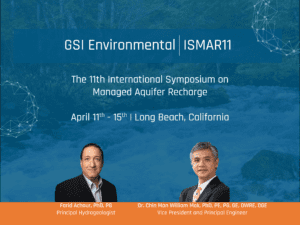
GSI will be presenting at the upcoming International Symposium on Managed Aquifer Recharge April 11th – 15th!
🌟 Addressing a Severe Water Scarcity Problem by Implementing a Fast and Durable Managed Aquifer Recharge Program in Northern Algeria (North Africa) presented by Dr. Farid Achour
🌟 Strategizing Recharge in Complex Settings by Optimization of Recycled Water Injection presented by Dr. Chin Man (Bill) Mok
Learn more about the conference at https://ismar11.net/#about
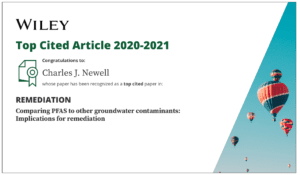
📃🔍 HUGE Congratulations to Chuck Newell, David Adamson, Poonam Kulkarni, P.E., Blossom Nzeribe, Ph.D., and Hans Stroo for their Top Cited Article of 2020-2021! #pfas #environmental #authors #GSI #nerds 👉👉 Read the article...
📃🔍 HUGE Congratulations to Chuck Newell, David Adamson, Poonam Kulkarni, P.E., Blossom Nzeribe, Ph.D., and Hans Stroo for their Top Cited Article of 2020-2021! #pfas #environmental #authors #GSI #nerds
👉👉 Read the article at linkedin
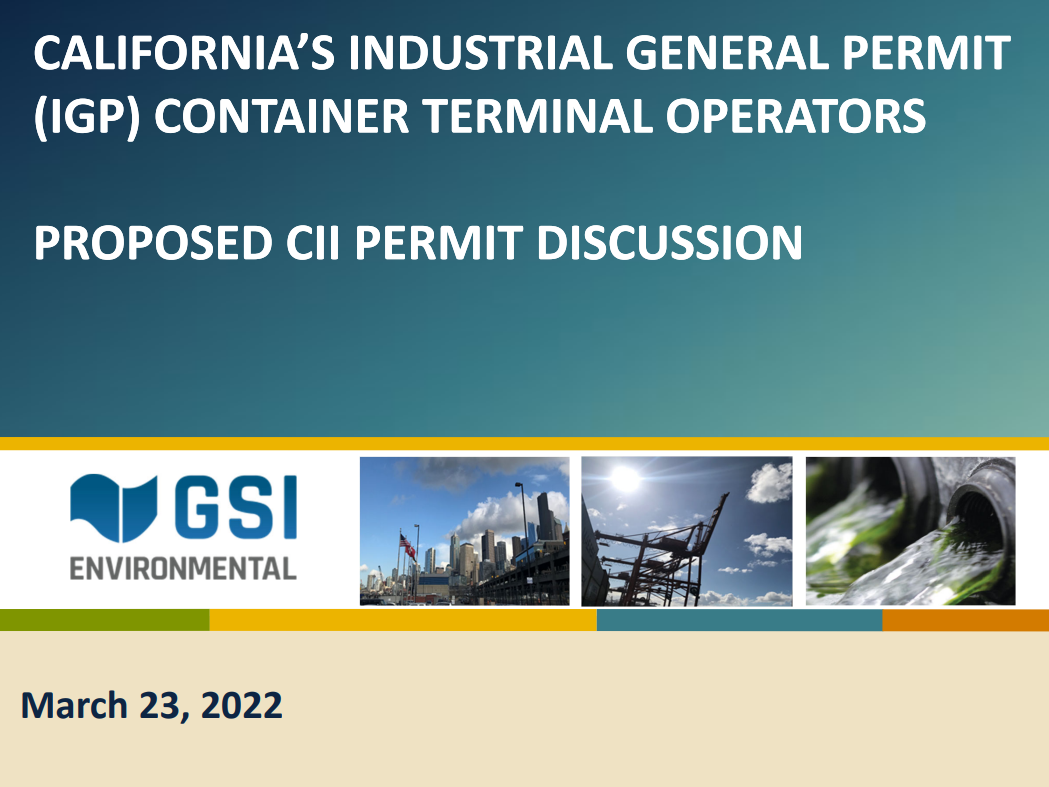
Timothy Simpson and Matthew Lentz recently hosted a 1-hour webinar for container terminal operators in California to provide information regarding a proposed stormwater permit...
Timothy Simpson and Matthew Lentz recently hosted a 1-hour webinar for container terminal operators in California to provide information regarding a proposed stormwater permit under development by the California Regional Water Quality Control Board – Los Angeles Region (LARWQCB) for commercial, industrial, and institutional facilities (CII Permit). The CII Permit is being developed in conjunction with USEPA Region 9’s use of their Residual Designation Authority to require NPDES Permits for stormwater dischargers not currently defined/regulated under the Clean Water Act. The CII Permit will apply to designated sites 𝐰𝐢𝐭𝐡 5 𝐚𝐜𝐫𝐞𝐬 𝐨𝐫 𝐦𝐨𝐫𝐞 of impervious area located in the Dominguez Channel/Greater Los Angeles and Long Beach Harbor Watershed and Los Cerritos Watershed.
🙏 We would like to thank Jennie Newman and Milasol Gaslan with LARWQCB for participating in the webinar and helping to answer questions.
👉 For more information and to learn more about how the proposed CII permit may impact your facility, download the attached slide deck here and contact GSI at stormwater@gsienv.com.
#commercial #industrial #institutionalfacilities #stormwater #proposed #permit #CIIPermit #CII
SERDP & ESTCP selected projects to develop cost-effective remedial technologies for matrices impacted by #PFAS resulting from the use of AFFF formulations. Read more on...
SERDP & ESTCP selected projects to develop cost-effective remedial technologies for matrices impacted by #PFAS resulting from the use of AFFF formulations. Read more on Dr. Chuck Newell‘s projects below! #mna #groundwater
https://lnkd.in/etscjNRpNovel Treatments for Per- and Polyfluoroalkyl Substance (PFAS)-Impacted Matrices (serdp-estcp.org)