The Purpose of Conducting an LCA for EPR Compliance
As pressure grows to improve packaging circularity and reduce waste, governments are increasingly adopting policies that place greater responsibility for end-of-life packaging...


As pressure grows to improve packaging circularity and reduce waste, governments are increasingly adopting policies that place greater responsibility for end-of-life packaging...
As pressure grows to improve packaging circularity and reduce waste, governments are increasingly adopting policies that place greater responsibility for end-of-life packaging management on producers. Extended Producer Responsibility (EPR) laws are one of the primary policy tools used to shift the financial and operational burden of packaging waste management onto producers while creating incentives for more recyclable and resource-efficient packaging designs. For companies with in-scope packaging, these laws can create significant new compliance obligations and costs. As packaging EPR requirements continue to develop, life cycle assessments (LCAs) can help producers evaluate packaging trade-offs, support redesign decisions, and, in some EPR programs such as Oregon’s, reduce EPR fees by demonstrating improved environmental performance.
Although extended producer responsibility is not a new concept, the growing number of packaging-specific EPR laws being introduced has brought the issue to the forefront for many companies bringing packaged products to market. Packaging EPR laws require producers to help fund and support systems that manage packaging at the end of its useful life through producer responsibility organizations and fee structures tied to the types, weights, and amounts of packaging introduced to the market. Adding complexity to the matter is that it is up to each state to develop EPR legislation applicable to producers within its scope. The legislation is still being developed and finalized in many states that have enacted EPR laws. Tracking the different compliance requirements and staggered deadlines can add an additional layer of stress for organizations operating across multiple EPR states.
The first producer fee invoices have begun being issued in Oregon and Colorado, and the public fee schedules show that costs can vary significantly depending on the types of packaging a company has supplied in each state. While specific fee schedules and circularity incentives vary by state, in general, states reward packaging choices that support recyclability, recycled content, and reuse systems.
Additionally, packaging may be subject to eco-modulation factors that affect the fees that in-scope organizations are responsible for. Eco-modulation works by increasing or decreasing producer fees based on packaging characteristics the state wants to discourage or reward. This can mean lower fees for packaging that better supports recyclability, recycled content, or reuse systems, and higher fees for materials that are harder to recover or recycle.
Specific to Oregon, producers may also request eco-modulated fee discounts by conducting voluntary life-cycle assessments (LCAs). Oregon awards larger eco-modulation bonuses for analyses that show that a packaging change has achieved a substantial reduction in environmental impacts. Outside Oregon, LCAs can still provide strategic value by helping producers test redesign options, document environmental trade-offs, and generate evidence that may support alignment with eco-modulation frameworks in other states, although there is not the same direct financial benefit seen in Oregon’s program.
While Oregon’s EPR legislation directly links eco-modulation adjustments to the life-cycle impacts of in-scope packaging, LCAs offer strategic value in other EPR states by helping producers compare packaging alternatives and prioritize redesigns that align with eco-modulation criteria. Many EPR programs reward packaging choices, such as using more recycled content, improving recyclability or compostability, and encouraging reuse.
An LCA helps producers avoid packaging changes that improve one performance characteristic while creating unintended consequences in another. Comparative LCAs can help organizations determine which materials or packaging formats best meet their needs, rather than focusing on a single factor. For example, conducting an LCA may reveal that switching packaging to a certain mono-material format improves recyclability but also increases GHG emissions because the replacement material is more energy-intensive to produce. Similarly, an analysis could find that reducing packaging weight may lower material usage but could also reduce product protection, leading to higher rates of damage, spoilage, or loss. By showing how a packaging system performs across multiple life-cycle stages and impact categories, LCAs provide organizations with a better understanding of redesign and purchasing decisions.
LCAs can also support EPR-related analysis and documentation by providing consistent, comparable data on a package’s environmental impacts across raw material extraction, manufacturing, transportation, and end-of-life management. This can help organizations identify impact hotspots in the supply chain, understand where meaningful improvements are possible, and focus efforts on changes that align with EPR compliance priorities.
In some states, these incentives are already taking shape. In Colorado, producers can submit voluntary data to qualify for certain incentives. LCAs can help pinpoint which packaging changes may be most valuable to track or invest in. Minnesota’s law strongly encourages packaging formats that are reusable, recyclable, compostable, or refillable. California requires in-scope producers to reduce plastic-covered material by 25% by 2032, adding another reason to compare packaging redesign options. LCAs can be a useful tool for producers to evaluate trade-offs and identify which redesigns are best aligned with EPR program priorities.
Organizations using LCA for EPR compliance generally conduct the assessment in accordance with ISO 14040 and ISO 14044 standards. These widely recognized standards provide a consistent framework for conducting and comparing life cycle assessments. Under these standards, an LCA is defined as a structured method for evaluating the potential environmental impacts of a product system across its life cycle.


Source: ISO Online Browsing Platform
For packaging, this typically means assessing impacts across key life-cycle stages, including raw material extraction, material pre-processing, product manufacturing, transportation and storage, and end-of-life management. The analysis may also consider performance-related factors such as product protection, spoilage, or product loss, as these outcomes can significantly affect the total life-cycle impact.
Under ISO 14040 and 14044, an LCA is generally conducted in four phases: goal and scope definition, life cycle inventory analysis, life cycle impact assessment, and interpretation. In practice, this defines which packaging systems are being compared and what functions they are meant to serve, gathers data on material and energy inputs, evaluates environmental impacts across selected categories, and interprets the results to understand trade-offs, hotspots, and opportunities for improvement.
While LCAs can be powerful tools for evaluating packaging alternatives, their results are heavily dependent on how the LCA is conducted. Choices such as end-of-life assumptions and data sources can materially affect the assessment outcomes, making results only as meaningful as the methodology behind them.
Packaging LCA results are most reliable when informed by the company or by other experts with product- and packaging-specific knowledge. Identifying realistic alternatives requires input on technical constraints that may not be reflected in publicly available LCA datasets. In practice, the company or its packaging provider helps identify realistic alternatives and provides the technical information needed to compare them. The LCA process then evaluates the environmental trade-offs among those packaging options. An LCA should be treated as a collaborative evaluation process, rather than a stand-alone exercise done without input from those responsible for packaging design and performance.
LCAs also do not automatically translate into lower EPR fees. A package may perform well in a life-cycle study but still fall short of an EPR program’s specific fee criteria related to recyclability, reuse, or recycled content. Additionally, conducting an LCA can require significant time, data collection, and technical review. LCAs are most useful when they are treated as structured decision-support tools that complement state-specific EPR compliance analysis.
As packaging EPR programs continue to take shape, producers are under increasing pressure to understand how packaging choices affect environmental performance and fee exposure. LCAs can provide a structured way to compare alternatives, identify tradeoffs, and support packaging decisions aligned with emerging EPR requirements. Although an LCA is not a substitute for state-specific compliance analysis, it can serve as a valuable decision-support tool for organizations seeking to better understand the potential environmental implications of packaging redesign options.
GSI can support comparative LCA analyses that evaluate packaging alternatives across their life cycles. This can help organizations compare options, identify unintended trade-offs, and make more informed decisions about source reduction, packaging changes, and potential EPR fee implications.

For many companies, the first CDP disclosure starts with a simple question: Do we actually need to do this? In most cases,...
For many companies, the first CDP disclosure starts with a simple question: Do we actually need to do this? In most cases, the answer is yes. CDP began as an investor-driven climate transparency initiative and evolved into a widely used component of the sustainability reporting landscape, closely aligned with frameworks such as TCFD, IFRS S2, and GRI. Since 2020, the number of disclosers has increased by roughly 30% annually with more than 22,000 companies, representing more than half of the global market capitalization, disclosing to CDP in 2025. Whether the request to disclose originates from a customer, investor, lender, or internal leadership, CDP has increasingly become the standard mechanism through which companies are
That pressure can make a first disclosure feel high stakes. The questionnaire is detailed, the scoring can seem opaque, and the process often highlights how many internal teams, data systems and processes must collaborate to produce a credible response. The good news is that first-time disclosure does not require perfection. What matters most is understanding what CDP is actually asking for, how the scoring works, and where companies tend to lose points that could otherwise be avoided.
First-time disclosers often assume CDP rewards volume of information disclosed – it does not. The goal of a first response is rarely to “say everything,” but rather to “clearly demonstrate where the business currently stands.” CDP awards points according to a published set of criteria to measure the maturity of a company’s response to each question.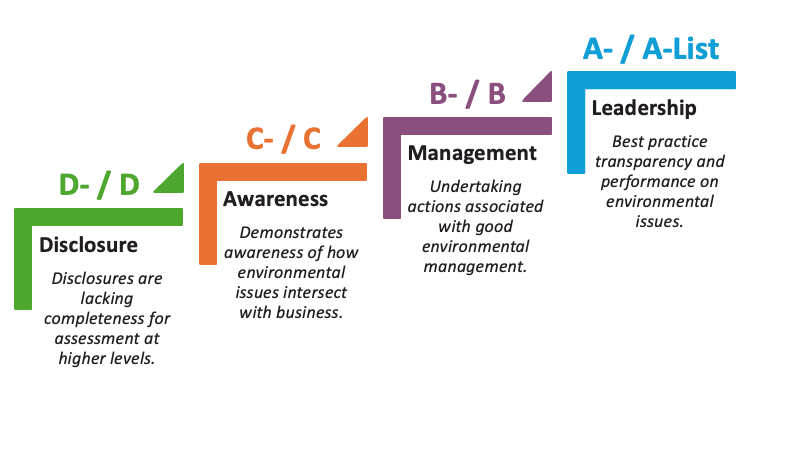 Companies at the C level may identify climate risks, report emissions, and set goals to establish targets and seek verification in the next two years. Companies at the B level demonstrates more formal governance, documented procedures, target tracking, and integration of climate considerations into business processes. At the A level, climate
considerations are strategically embedded across the organization, supported by credible targets, and demonstrate an influence that extends beyond the company’s own operations.
Progressing through these levels is not about writing longer responses. It is about providing qualitative evidence of how climate considerations are managed and integrated into the business.
One of the most common ways companies lose points is through inconsistency in question responses. Qualitative questions benefit from clear, structured responses following a logic such as Situation, Task, Action, Result/Review. Even well-written narratives can still miss scoring criteria if they do not directly address specific elements of the prompt.
Quantitative questions present a different challenge – data must reconcile across the entire questionnaire. Total emissions, energy use, and related figures should align wherever they appear. Discrepancies between responses can raise questions about data quality or internal controls, and the company will lose points.
For first-time reporters, this is one of the most practical lessons. Before submission, responses should be reviewed less like a narrative report and more like an audited package. Metrics should be defined consistently and tell the same story in every response.
With the question bank set to release mid-April, the time to begin preparing is now. First-time reporters often underestimate how long it takes to coordinate internal contributors, gather supporting evidence, confirm data, review narrative responses, and resolve inconsistencies. By the time the disclosure window opens in June, companies should already know who owns governance modules, who owns emissions data, who can speak to strategy and risk, and who is responsible for reviewing and approving the final submission.
This is especially true when the disclosure depends on external assurance, target validation, enterprise risk processes, legal review, or executive signoff. While the disclosure is submitted through a single portal, the evidence needed to support it usually lives across multiple functions, including finance, sustainability, legal, operations, procurement, facilities, and executive leadership.
If this is your first year, the primary objective should be credibility and internal coordination rather than score maximization.
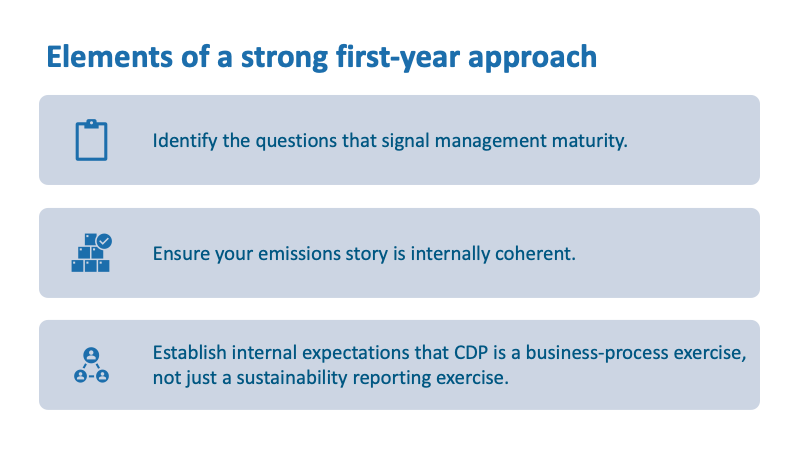 In many cases, the most valuable outcome of a first disclosure is not the grade itself. Instead, the process reveals where governance is still informal, where data collection is weak, and where strategy and environmental reporting remain disconnected. That visibility is often what enables meaningful improvement in the second year.
For first-time disclosers, CDP can be a complex and demanding process. GSI can help ease that burden by offering disclosure support, by mock-scoring questionnaire drafts to bring greater transparency to the scoring process, and by providing strategic assistance in communicating reasonable expectations to internal and external stakeholders. For companies with prior CDP disclosure experience, GSI also brings a strong track record in supporting grade improvement efforts and has even helped clients raise their score by a full letter grade.

Municipalities carry climate responsibilities that extend far beyond those of individual businesses. They serve whole communities, including residents and local businesses, and...
Municipalities carry climate responsibilities that extend far beyond those of individual businesses. They serve whole communities, including residents and local businesses, and can’t simply “pause operations” during disruptions or “shut down” if climate conditions get worse. Local governments also serve as a conduit for community-wide action, coordinating cross-sector efforts and investing in shared infrastructure when private-sector action is uneven or limited in scope. Residents depend on these efforts for everything from storm preparation and wildfire response to flood control, cooling centers, infrastructure upgrades, and programs that help stabilize insurance and utility costs. They also help local businesses prepare for new environmental regulations. For many communities, Climate Action Plans (CAPs) and Climate Action and Adaptation Plans (CAAPs) provide a structured framework for prioritizing investments, securing funding, coordinating across departments, and tracking progress over time.
By 2050, urbanization and population growth could add about 2.5 billion people to urban areas, with estimates suggesting roughly 68% of the world’s population will live in cities. Urban growth concentrates people, infrastructure, and economic activity in hazard-exposed areas, and a single climate event can strain multiple community services at once. This makes proactive planning increasingly important. What is a Climate Action Plan (CAP) or a Climate Action and Adaptation Plan (CAAP)?
A Climate Action Plan (CAP) is a strategic roadmap that municipalities use to identify actions local government and community partners can take to reduce greenhouse gas (GHG) emissions and strengthen infrastructure and services in response to climate change. Municipalities at the beginning of their sustainability journey commonly emphasize mitigation efforts, such as reducing emissions. As climate planning and sustainability programs mature and new challenges develop, CAPs are often expanded into Climate Action and Adaptation Plans (CAAPs). CAAPs combine efforts to reduce emissions with adaptation and resilience measures to address climate impacts and maintain the continuity of essential community services. CAAPs typically include clear climate-related goals and performance indicators to track progress and outcomes.
Municipalities adopt CAPs and CAAPs for many reasons, including funding, but plans are also adopted to meet state requirements, local policy mandates, equity priorities, resilience planning, and long-term financial risk management.
The Inflation Reduction Act (IRA), passed in 2022, substantially increased municipal-level climate action by creating new funding streams for initiatives that promote sustainable infrastructure and economic development. Grants, tax credits, and other incentives for clean energy projects, electrification, and emissions reductions enabled many communities to begin developing and implementing CAPs. As local governments began implementing initial CAP measures, many recognized that reducing emissions alone doesn’t address local climate vulnerabilities. That realization led many communities to expand their CAPs into CAAPs, so that mitigation actions paired with vulnerability assessments and adaptation actions reduce climate risks and support the continuity of essential community services.
Federal funding can be a catalyst in developing a climate plan, but it’s not always dependable from one funding cycle to the next. As a result, many cities pursue federal opportunities when available while relying more heavily on state targets, requirements, and incentive programs to shape their plans and obtain funding. More broadly, municipalities implement climate plans to align targets with local and state initiatives, pursue grants, center equity and environmental justice in community development and rezoning, manage climate-related financial risks, and coordinate action across departments and agencies.
CAPs/CAAPs can also help cities translate state priorities into practical local actions. In California, legislation such as Assembly Bill 1279, which mandates statewide carbon neutrality by 2045, and CARB’s Scoping Plan and Priority Local Actions guide municipalities on actions and implementation plans for sustainability-aligned infrastructure, land use, transportation, and building decarbonization strategies to align with the state’s broader goals. This is reinforced further by Senate Bill 375, which links transportation and land-use planning through regional passenger-vehicle GHG targets and Sustainable Communities Strategies. Aligning plans with state-level goals can strengthen a city’s competitive position for receiving state-allocated funding tied to EV infrastructure, public transportation projects, wildfire resilience, and other sustainability or climate-related initiatives. California’s Senate Bill 1000 further shapes municipal climate planning by requiring local governments to identify disadvantaged communities and address environmental justice in planning, which CAPs/CAAPs can support by embedding equity into plan priorities and implementation actions.
Alongside state targets and planning requirements, California also backs implementation with incentive programs that help cities move from the planning stage to project delivery, with funding to support implementation. For instance, CARB administers the Low Carbon Transportation Incentives (LCTI) and the Air Quality Improvement Program (AQIP), which support clean transportation and advance sustainable technologies and infrastructure. LCTI is part of the California Climate Investments, which uses the proceeds from the Cap-and-Trade program to fund programs across agencies and sectors to reduce GHG emissions, improve public health, and provide economic benefits. The AQIP, created under Assembly Bill 118, emphasizes reductions in harmful air pollutants and diesel particulate matter. Other California Climate Investments programs, such as the Affordable Housing and Sustainable Communities (AHSC) Program, the Low-Carbon Transit Operations Program (LCTOP), and the Transformative Climate Communities (TCC) Program, also help cities finance the implementation of their plans.
In California, climate planning can also intersect with the California Environmental Quality Act (CEQA). A CAP/CAAP can sometimes serve as a plan-level foundation for evaluating GHG emissions and mitigation measures, which may reduce the need for analysis in later projects where appropriate. When a CAP/CAAP is CEQA-reviewed and designed to meet the criteria in CEQA Guidelines §15183.5, it can provide a consistent framework for future project-level GHG analysis. That being said, whether a project actually streamlines the CEQA review process later comes down to the available evidence, the enforceability of the plan, and how closely follow-up projects are aligned with the plan.
In other regions, local climate ordinances are also increasing the need for formal climate action plans. Policies like New York City’s Local Law 97 and Boston’s Building Emissions Reduction and Disclosure (BERDO) translate emissions goals into building-level requirements. A CAP/CAAP can provide the shared baseline, targets, and cross-departmental coordination needed to implement these programs consistently over time.
Pre-disaster resilience and hazard mitigation grant funding is another major driver of plan adoption. For example, FEMA Hazard Mitigation Assistance Grants prioritize communities that can show an adopted risk-reduction strategy, and CAAPs can complement that process by connecting vulnerability and risk assessment findings to fundable mitigation and adaptation projects. Municipal budgeting is another reason to formalize climate planning, as climate risk can affect a city’s bottom line. When municipal bonds are issued to fund infrastructure projects, credit rating agencies such as S&P Global Ratings, Moody’s, and Fitch Ratings assess the creditworthiness of the cities and the bonds they issue. Climate-related risks, such as wildfire, flooding, and extreme heat, are increasingly factored into these ratings. Because ratings can affect borrowing costs and financial flexibility, CAPs/CAAPs can help cities document risks and outline plans to reduce, mitigate, or adapt to them, supporting long-term budgeting and investment decisions.
Every city approaches climate planning slightly differently, but there are globally applicable guiding principles that make these plans more effective (Figure 1, UN-Habitat) and many municipalities use established frameworks and tools such as C40 Cities, the Global Covenant of Mayors, and the International Council for Local Environmental Initiatives (ICLEI) to guide inventory development, target-setting, implementation planning, and progress tracking within the plan. Cities typically implement these principles through sustained stakeholder engagement and clear documentation of how informed priorities and decisions are made.
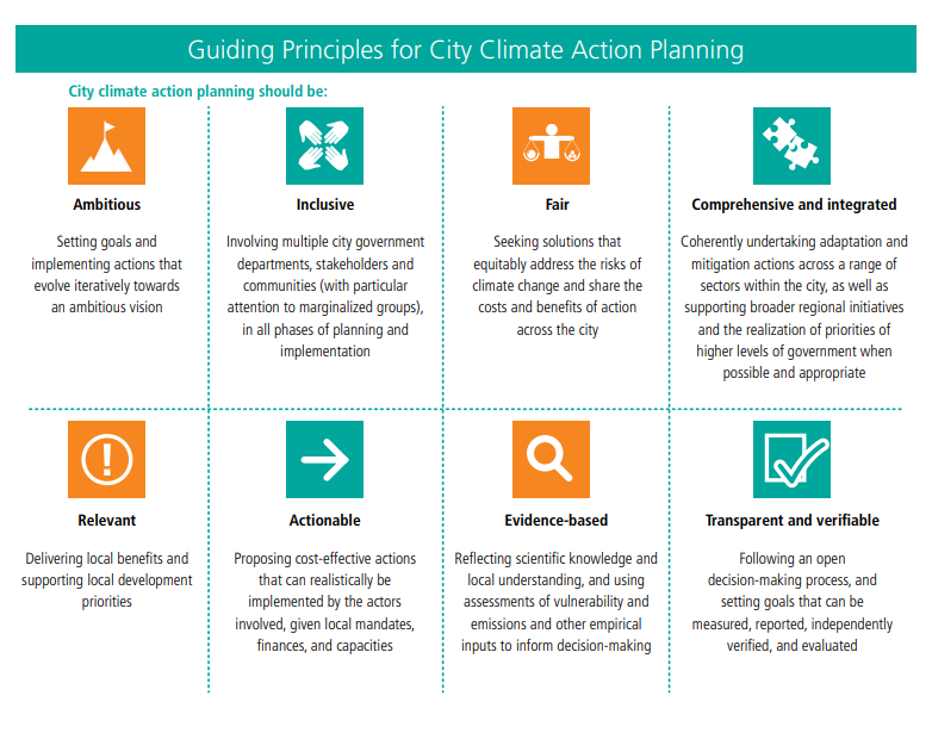
Source: UN-Habitat Guiding Principles for City Climate Action Planning
A strong CAP/CAAP is more than a list of aspirational projects. It’s a plan that connects baseline measurements, actionable strategies, and measurable progress over time. Essential components shared by the most successful plans include:
Originally, many cities focused primarily on emissions reduction. As physical climate risks intensify, adaptation is unavoidable. A CAAP includes everything in a CAP, plus structured climate risk and resilience planning. CAAPs reflect a shift from carbon management to comprehensive climate risk management:
Collectively, these elements establish a plan that can be implemented, financed, and monitored effectively over time. How these elements are developed and implemented differ across municipalities.
Whether a community is drafting its first CAP or updating an existing one to include adaptation, the planning cycle is similar. Communities generally start by establishing or updating a baseline, such as a greenhouse gas inventory, reduction targets, and, for CAAPs, a vulnerability profile. Next, they translate key priorities into sector-specific actions and formalize the governance, funding, and monitoring systems needed to implement and track progress. The primary focus of these plans evolves. Initial versions often concentrate on reducing emissions, while subsequent updates place greater emphasis on addressing climate risk, vulnerability, and resilience to help ensure essential community services continue without interruption.
The examples below compare two similarly sized fictional municipalities at different stages of maturity. One is developing its first CAP, while the other is updating its CAP to a CAAP to plan and implement adaptation and resilience actions. By comparing their approaches, we can highlight how the process adapts to each community’s needs and circumstances.

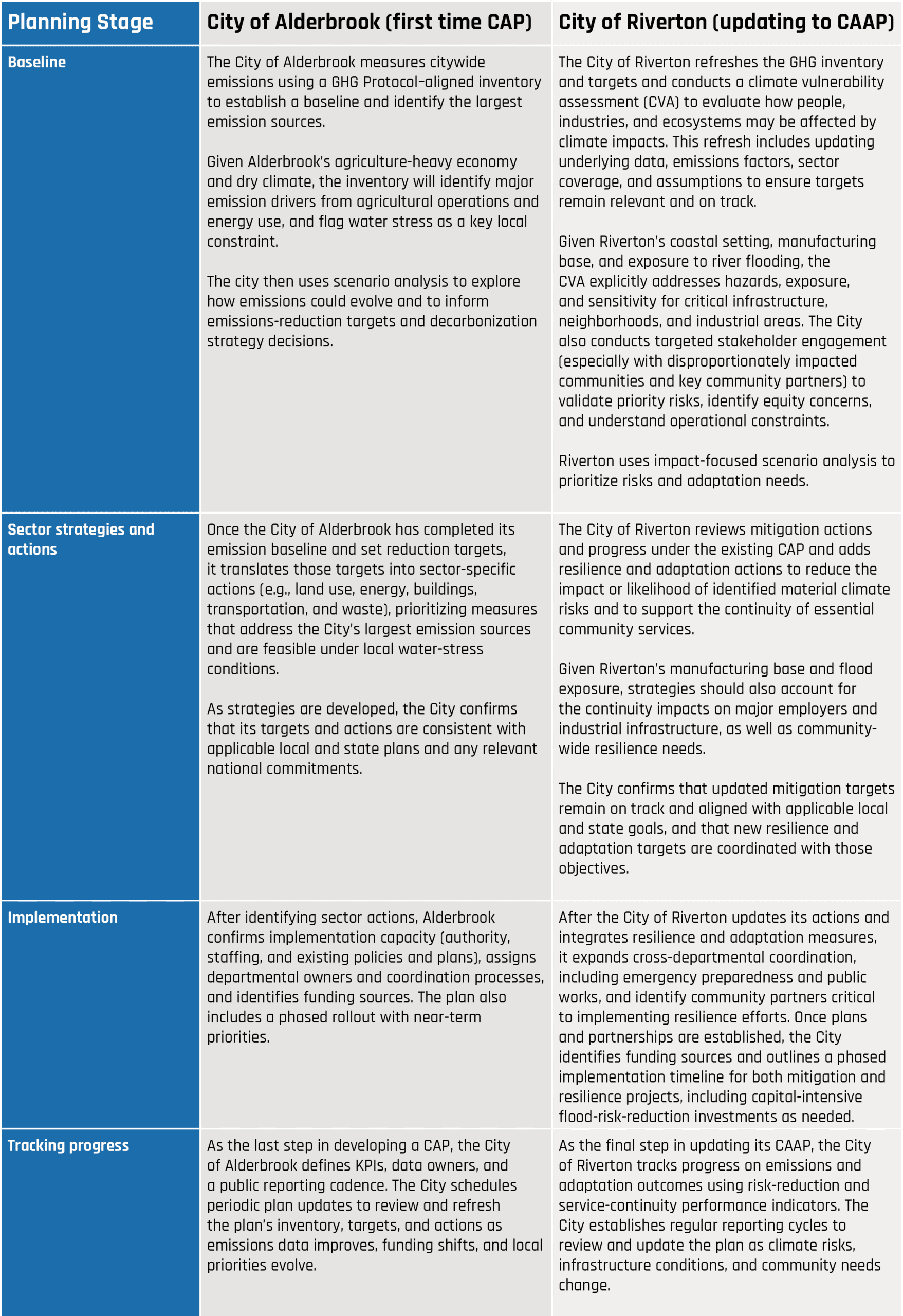
Both cities use the same planning cycle; however, the City of Riverton’s maturity changes the depth and integration of risk and resilience. The most important common aspect of the CAP and CAAP examples above is the review-and-refresh cycle. Plans should be updated regularly as inventories improve, risks are reassessed and reprioritized, funding shifts, and community priorities evolve.
Alderbrook and Riverton are illustrative examples, but the transition from CAPs to more integrated climate-and-resilience planning is already happening in many cities. Below are a few examples showing how California cities have integrated adaptation and resilience into their climate planning.
City of Santa Monica:
 The City of Santa Monica created a short-term CAP, the “15X15” plan, in 2013, designed around a near-term target of reducing GHG emissions by 15% by 2015. Sector-specific targets were established across energy use and generation, waste reduction and recycling, transportation and mobility, open space and land use, water conservation and efficiency, local food and agriculture, and municipal operations. The plan focused on practical mitigation actions to meet near-term GHG reduction goals.
In 2019, Santa Monica adopted a Climate Action and Adaptation Plan (CAAP) that expanded the city’s work from near-term mitigation to a longer-term strategy with deeper emissions cuts and a formal adaptation framework. The CAAP set more ambitious targets, including carbon neutrality by 2050, and organized mitigation actions around key sectors (buildings, waste, and mobility) while adding dedicated resilience strategies focused on community preparedness, water, coastal flooding, and ecosystems.
City of Sacramento:
 Sacramento’s early climate planning centered on a community-wide Climate Action Plan that set near-term emissions-reduction goals and embedded climate policies into long-term strategic planning. The City adopted a CAP in 2012 with a 2020 emissions target and then incorporated an updated community CAP into the 2035 General Plan when it was adopted in 2015. Sacramento’s General Plan is the City’s long-term policy blueprint for growth and investment, guiding land use, infrastructure, and related programs.
In 2024, Sacramento adopted a CAAP alongside its 2040 General Plan. The CAAP expanded climate efforts from primarily mitigation planning to a more integrated framework of mitigation and adaptation. The CAAP sets updated climate targets (including a 2030 per-capita emissions target and a net-zero goal) and is explicitly framed to both reduce emissions and address climate impacts through adaptation planning.
City of Irvine:
 The City of Irvine took a different approach to bolstering its climate action planning. Rather than updating an existing CAP, the City began by setting its direction through a citywide climate resolution called Irvine ACHIEVES, a policy statement that outlined key strategies, established a 2030 carbon-neutrality target, and launched a planning process to develop a comprehensive CAAP.
Through the CAAP process, the City engaged the community to set priorities, developed a GHG inventory and targets, and conducted a vulnerability assessment to guide adaptation planning. This resulted in an integrated plan covering both emissions reduction and climate risk.
These real-world examples mirror those of Alderbrook and Riverton. Early plans often begin with mitigation fundamentals, and later updates strengthen the work by adding vulnerability assessments, adaptation measures, and more robust implementation systems. Cities may call these documents different things (CAP, CAAP, Climate Action & Resilience Plan), but the evolution of these plans is similar: over time, municipalities develop clearer accountability, a stronger link between risk and investment, and greater integration across departments and planning procedures.
Effective climate planning is a continuous process, not a one-time achievement. Success depends less on the specific label, CAP or CAAP, and more on whether the plan remains practical and adaptable over time. The Alderbrook and Riverton examples show how plans can evolve to reflect changing conditions, expanding capacity and scope as needed. Early plans typically focus on organizing emissions data, setting clear targets, and implementing sector actions within available resources. As plans mature, they integrate detailed risk assessments and scenario planning to inform resilience and adaptation investments and safeguard essential community services. Treating the plan as an ongoing management tool, supported by routine updates, transparent reporting, and active stakeholder engagement, ensures it remains relevant and effective as local needs and priorities shift.
For communities just beginning this process, the priority should be to establish a solid baseline and identify a manageable set of initial actions. For those with more experience, efforts should focus on bolstering accountability, updating targets, and integrating resilience to align the plan with evolving risks and realities.
If your city is building a Climate Action Plan or updating a Climate Action and Adaptation Plan, we can help with the technical analysis, stakeholder process, and implementation roadmap needed to turn climate goals into feasible and managed action plans. At GSI, our experts help support municipalities with CAPs and CAAPs through the following services:

EcoVadis was founded in 2007 and launched in Paris[8]; it has since grown into a global provider of business sustainability ratings used...
EcoVadis was founded in 2007 and launched in Paris[8]; it has since grown into a global provider of business sustainability ratings used in supply chains. [9] EcoVadis describes its sustainability assessment as a paid service delivered through registration, questionnaire, expert analysis, and results. [10]
Methodologically, EcoVadis evaluates the quality of a company’s sustainability management system through Policies, Actions, and Results, and it operationalizes these through seven management indicators (Policies, Endorsements, Measures, Certifications, Coverage, Reporting, and 360° Watch Findings). [11] The framework covers up to 21 criteria grouped into four themes:
The assessed criteria is tailored to the individual company profile and risk context [12] and translated into a verified score from 0 to 100. Disclosing companies receive medals or badges based on percentile ranking relative to peers. Medal thresholds are percentile-based across all assessed companies in the prior 12 months: Platinum (top 1%), Gold (top 5%), Silver (top 15%), Bronze (top 35%). [15]
EcoVadis is not a public sustainability reporting platform; rather it is a procurement-facing management system assessment. Its purpose is to help buyers understand whether a supplier has credible, functioning sustainability programs in place.
Evidence rules are unusually practical (and that’s the point!). EcoVadis says supporting documents should be recent, relevant, complete, and aligned to the scope of evaluation, and it provides examples such as sustainability procedures, audit reports, HSE policies, codes of conduct, employee handbooks, and ISO certificates. [13]
EcoVadis is designed around supplier assessment and scorecard sharing with trading partners, and it positions its ratings as analyst-validated supplier assessments with continuous improvement tooling. [16] For suppliers, EcoVadis often becomes a market access gate: not a complete measure of sustainability, but a standardized proxy for whether management systems exist, operate, and can be evidenced. [17]
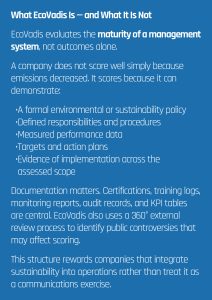 It is also a reputational and compliance signal. EcoVadis describes 360° Watch as a complementary screening using external stakeholder inputs and notes that significant cases (for example, fines or sanctions) can affect theme scores based on severity. [2] This tends to reward companies that can demonstrate preventive controls, corrective action discipline, and clean documentation, not just aspirational policies.
Regulation is pushing the same direction. The European Commission[18] describes EU corporate sustainability reporting rules as requiring large and listed companies to report on sustainability risks and on impacts to people and the environment, supported by standards covering the full ESG range. [19] Even where a supplier is not directly in scope, customer requests commonly cascade through value chains.
EcoVadis sits alongside sustainability disclosure frameworks and standards by focusing on the verifiable management system underneath the narrative. Global Reporting Initiative (GRI) [20] provides a broad impact reporting framework across economic, environmental, and social topics. [21] The International Sustainability Standards Board[22] IFRS S1 and IFRS S2 standards focus on sustainability-related and climate-related financial disclosures for capital markets, and the Sustainability Accounting Standards Board[23] standards are maintained as industry-based guidance under the ISSB ecosystem. [24]
Practically, the payoff is consolidation
EcoVadis’ methodology materials emphasize alignment with these global frameworks and standards and an evidence-based approach that combines company documentation, third-party endorsements, and external monitoring inputs. [25] Practically, the payoff is consolidation: one well-governed data and evidence system can serve EcoVadis, CDP, GRI-based reporting, and CSRD-aligned customer data demands, reducing the annual scramble. [26]
Another way to look at the strategic advantage of EcoVadis is illustrated by the graphic below. Sustainability expectations cascade through markets: regulations and competitive pressures apply first to companies directly in scope, and those companies then pass requirements down to their suppliers through questionnaires, data requests, and ESG ratings such as EcoVadis. Procurement departments use EcoVadis as a standardized comparison tool to evaluate the maturity of suppliers’ sustainability management systems across environmental, labor, ethics, and procurement criteria. When two suppliers offer comparable products or services at similar cost and quality, but one holds an EcoVadis medal and the other has not submitted at all, the rated supplier provides greater transparency, verified documentation, and lower reputational and regulatory risk. If stakeholders or investors prioritize sustainability performance, procurement is far more likely to select the supplier with the demonstrated, externally assessed management system, as it signals governance strength, operational controls, and alignment with evolving market expectations.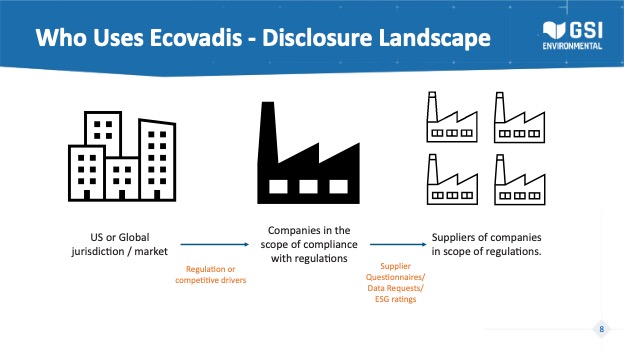
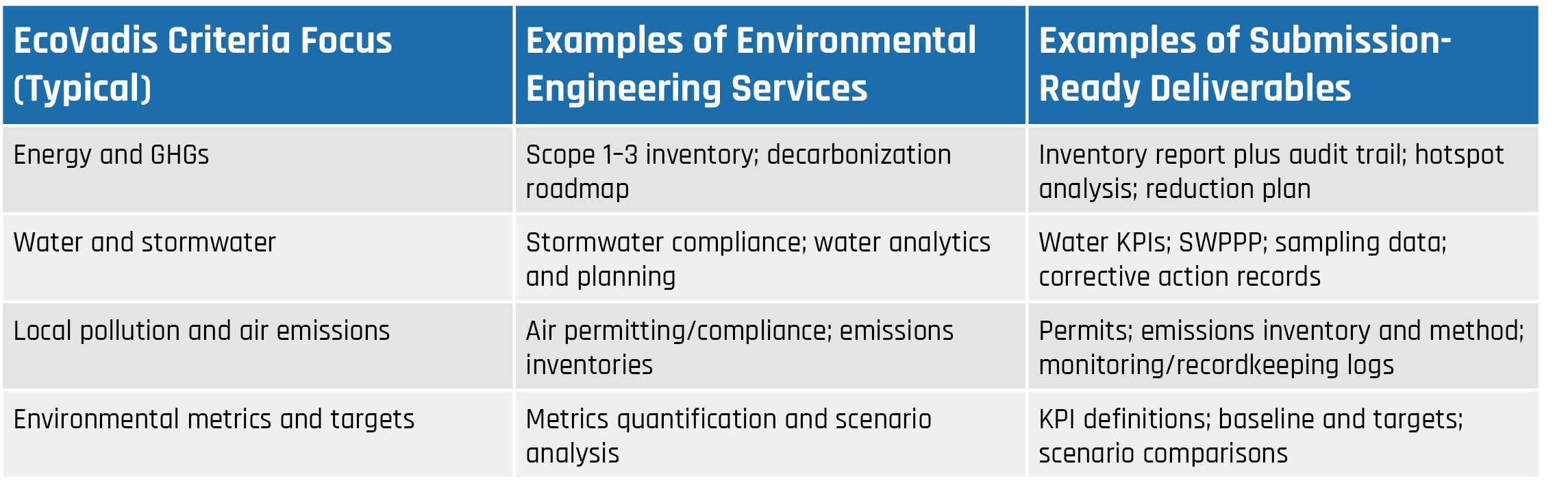
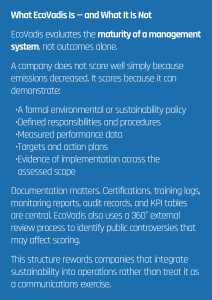 EcoVadis’ “Coverage” concept rewards programs that are deployed consistently across the assessed scope, not just piloted at one facility. [27] That makes operational measurement and compliance programs disproportionately valuable because they create repeatable, auditable evidence: plans and procedures, monitoring logs, results tables, and corrective action records. [28] A practical maturity-building pattern is to treat each relevant EcoVadis criterion as a small “evidence pack” spanning policy, process, KPI results, training/communication, and proof of deployment.
Environmental Metrics Quantification establishes clear definitions, calculation methods, and data controls for key sustainability indicators so that performance results are accurate, consistent across facilities, and comparable over time. This structure strengthens the quality and defensibility of EcoVadis “Results” and “Reporting” responses by ensuring that data is traceable and decision-relevant.
On the operational side, technical compliance work provides the documented evidence that EcoVadis expects. Air services generate permitting records, emissions inventories, monitoring logs, and regulatory reports. Stormwater programs produce compliance strategies, employee training records, sampling data, SWPPPs, corrective action plans, and centralized data systems that house analytical results and supporting documentation. Together, these materials demonstrate that environmental policies are not only written, but actively implemented and monitored.
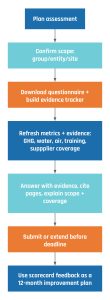 EcoVadis provides a 30-business-day submission window once the questionnaire opens, but strong submissions are rarely built within those 30 days alone. [33] In practice, companies benefit from beginning preparation at least four months before submission. That longer timeline creates space to identify structural gaps, formalize documentation, and ensure that supporting materials reflect established practices rather than documents created solely for the rating. EcoVadis documentation guidance generally expects that materials demonstrate implementation and maturity, and documents created or dated too close to submission may not be credited in the same way as established records. Beginning preparation early allows organizations to update policies with proper approvals, document training completion, refine KPIs, and implement corrective actions well before the assessment window opens.
EcoVadis is not a one-person exercise
The process of supporting GSI clients with their EcoVadis submissions typically begins with a structured kickoff meeting that brings internal stakeholders together to understand what EcoVadis is, how procurement departments use it, and what evidence expectations look like. EcoVadis is not a one-person exercise. It requires coordinated input across departments with operational knowledge of internal processes and documentation. Facilities may oversee environmental permits and monitoring logs. HR may manage diversity policies and employee training records. EHS may maintain greenhouse gas inventories and compliance documentation. Legal may control codes of conduct and governance procedures. Finance may track risk-related metrics. Frequently, each function operates effectively within its own domain, yet no single individual has visibility into how these materials connect within a sustainability rating framework.
Once relevant stakeholders are identified, focused working sessions help translate questionnaire language into practical documentation. This is where clarity and organization become essential. A facilities manager may not immediately recognize that a stormwater monitoring log satisfies an environmental evidence requirement. HR may not realize that a signed DEI policy requires a visible approval date and defined review cycle to qualify. Greenhouse gas inventories may exist, but ownership and version control may not be clearly defined. These cross-functional reviews take time, but with knowledge of the process and disciplined coordination, documentation can be gathered efficiently and mapped to specific questionnaire requirements.
After documentation is assembled, a consolidated review allows companies to identify short-term improvements before submission. Many gaps are procedural rather than substantive. A training program may exist but lack formal attendance records. A policy may be implemented but missing a signature, date, or company logo. Targets may be tracked internally but not formally documented. It is not uncommon to lose points because a supporting document lacks proper formatting or fails to demonstrate scope coverage. Addressing these issues two months before submission ensures that documentation reflects established implementation rather than last-minute preparation.
When the questionnaire officially opens, the organization shifts into execution mode. During the 30-business-day window, responses should be tightly aligned with available evidence, clearly referenced, and annotated so analysts can easily locate supporting pages and understand coverage statements. [33] Because preparation occurred months in advance, the submission period becomes a structured sprint rather than a scramble.
There is, however, an important caveat. Especially for first-time submitters, companies do not know the exact questions they will receive until the questionnaire is released. EcoVadis tailors questionnaires based on industry, size, geography, and risk profile, and the methodology evolves year over year to reflect its commitment to continuous improvement. This means preparation cannot rely on predicting specific questions. Instead, it must focus on strengthening the underlying management system, refreshing core metrics, updating policies, and ensuring documentation is complete, approved, and traceable.
At GSI, we have been able to help companies prepare effectively even before they gain access to their specific questionnaire. Having supported multiple submissions across industries, we understand the recurring themes, common documentation gaps, and typical areas of weakness. While no one can know the exact questionnaire in advance, experience allows preparation to be targeted and strategic. By focusing on foundational policies, measurable results, governance structures, and evidence quality, companies are positioned to respond confidently when the tailored questionnaire becomes available, regardless of minor variations in wording or emphasis. After submission, EcoVadis analysts review the materials and issue a scorecard that includes a 0–100 score, percentile ranking, theme-level breakdown, and medal or badge status where applicable. The scorecard also outlines improvement areas. Rather than treating the result as a final judgment, high-performing organizations use it as a roadmap for the next cycle. Since scorecards are valid for 12 months, companies that maintain documentation continuously, refresh policies on schedule, track environmental metrics consistently, and document training throughout the year find that each subsequent submission becomes more streamlined and more reflective of true organizational maturity. [34]
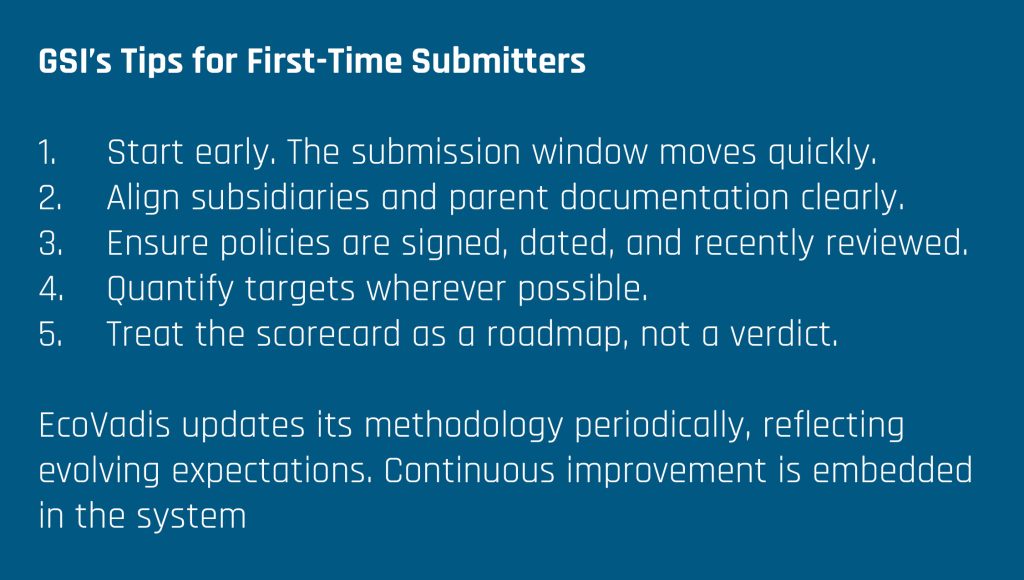
Starting four months in advance transforms EcoVadis from a compliance exercise into a management systems discipline. The rating rewards established programs, traceable data, and cross-functional coordination. With sufficient lead time, companies can ensure that what is submitted is not only complete, but representative of how sustainability is genuinely embedded within the organization.
EcoVadis reflects a broader shift in how sustainability is evaluated in the marketplace. Sustainability performance is no longer confined to annual reports or marketing materials. It is embedded in procurement decisions, enterprise risk management, lender due diligence, and operational governance. Companies that approach EcoVadis as a one-time compliance task may secure a score, but companies that treat it as an internal systems audit build something more durable. The distinction lies in integration.
Consider two suppliers operating in the same sector with similar products, pricing, and quality. One completes the EcoVadis questionnaire each year by gathering documents in a rush, updating policies only when requested, and treating the exercise as an administrative requirement. The other uses EcoVadis as a structured review of how sustainability is governed across the organization. In the second company, environmental monitoring is tracked routinely, greenhouse gas inventories are updated on a defined schedule, training records are maintained centrally, supplier screening is embedded in procurement workflows, and policies are reviewed annually with documented approvals. The EcoVadis submission in this case does not require new work. It simply reflects work already being done.
The practical implications are significant. Companies with higher EcoVadis scores often demonstrate stronger internal controls and clearer lines of accountability. When a regulatory update occurs, they already have documented procedures and assigned owners. When a customer requests emissions data or water consumption metrics, the information is retrievable and defensible. When a controversy arises in the supply chain, they can point to due diligence processes, supplier codes of conduct, and screening mechanisms. These capabilities reduce operational disruption and reputational exposure.
Resilience emerges from this alignment. Environmental compliance programs reduce the likelihood of violations. Documented greenhouse gas inventories enable scenario planning and transition risk analysis. Structured supplier oversight mitigates downstream exposure to human rights or environmental incidents. Governance frameworks ensure that sustainability considerations are integrated into executive decision-making rather than handled reactively. In this context, a strong EcoVadis score is not the goal itself. It is a byproduct of coherent management systems.
When environmental monitoring, compliance programs, greenhouse gas inventories, supplier oversight, and governance structures are documented and aligned, EcoVadis becomes less of a sprint and more of a reflection of organizational maturity. The rating validates what is already embedded in operations. That shift from reactive disclosure to integrated management is where long-term value is created, because the company is not merely responding to external pressure. It is building systems that anticipate it.
[1] [17] https://resources.ecovadis.com/ecovadis-solution-materials/csr-rating-methodology-scoring-principles
[2] https://support.ecovadis.com/hc/en-us/articles/115005125328-How-the-360-Watch-Findings-works
[3] [6] [11] [23] [32] https://support.ecovadis.com/hc/en-us/articles/115002531507-What-is-the-EcoVadis-methodology
[4] [7] [8] [12] [18] [25] https://resources.ecovadis.com/whitepapers/ecovadis-ratings-methodology-overview-and-principles-2022-neutral
[5] [22] https://www.gsienv.com/services/sustainability-climate/ghg-and-climate-services/
[9] https://ecovadis.com/about-us/
[10] https://support.ecovadis.com/hc/en-us/articles/115002653188-What-is-the-EcoVadis-assessment-process
[13] [28] [35] https://support.ecovadis.com/hc/en-us/articles/210460307-Understanding-supporting-documents
[14] [33] https://support.ecovadis.com/hc/en-us/articles/210459457-How-long-does-it-take-to-complete-the-questionnaire
[15] https://support.ecovadis.com/hc/en-us/articles/210460227-Understanding-EcoVadis-Medals-and-Badges
[16] https://ecovadis.com/solutions/ratings/
[19] https://finance.ec.europa.eu/capital-markets-union-and-financial-markets/company-reporting-and-auditing/company-reporting/corporate-sustainability-reporting_en
[20] [21] https://www.globalreporting.org/
[24] https://www.ifrs.org/issued-standards/ifrs-sustainability-standards-navigator/ifrs-s1-general-requirements/
[26] https://www.cdp.net/en/disclose/question-bank
[27] https://d2uars7xkdmztq.cloudfront.net/app_resources/54766/documentation/194666_en.pdf
[29] https://www.gsienv.com/services/sustainability-climate/
[30] https://www.gsienv.com/services/sustainability-climate/environmental-metrics-quantification/
[31] https://www.gsienv.com/services/air/
[34] https://support.ecovadis.com/hc/en-us/articles/11564680007442-What-happens-after-you-get-a-scorecard

For many organizations, managing environmental issues can be reactive. Environmental management often consists of responding to inspections, incidents, or customer requests as...
For many organizations, managing environmental issues can be reactive. Environmental management often consists of responding to inspections, incidents, or customer requests as they arise. ISO 14001 provides a structured, proactive system for managing environmental risks and compliance obligations, and for improving performance and efficiency through integrating environmental management processes across business operations.
The International Organization for Standardization (ISO) is an independent NGO that develops voluntary, widely adopted, interoperable international standards to promote quality, safety, and efficiency across products, services, systems, and processes. ISO has published over 26,000 standards spanning nearly all aspects of technology, management, and manufacturing.
ISO standards are designed to work together. Many management system standards, including ISO 14001, share a common high-level structure, which allows organizations to integrate them into a single, cohesive management system. For example, ISO 14001 aligns structurally with ISO 9001 (Quality Management Systems), ISO 45001 (Occupational Health and Safety), and ISO 50001 (Energy Management). In addition, other standards in the ISO 14000 family support ISO 14001 by providing more detailed guidance on specific topics, such as ISO 14064 for greenhouse gas accounting and ISO 14040 for life cycle assessment.
ISO 14001 also plays an important supporting role in today’s sustainability and climate-related reporting landscape. While ISO 14001 is not a disclosure framework, it helps establish the internal systems, controls, and governance processes that many reporting requirements rely on. ISO 14001 provides a practical management foundation that can support regulatory disclosures, investor reporting, and voluntary sustainability frameworks. In this way, ISO 14001 helps ensure that sustainability and climate disclosures are grounded in repeatable, defensible processes that reflect how the business actually operates.
ISO 14001 was developed to help companies of all sizes implement and manage environmental management systems. The standard provides a structured framework for identifying environmental risks and impacts associated with an organization’s activities, products, and services; understanding and meeting compliance obligations; setting meaningful environmental objectives; and driving continual improvement in environmental performance.
ISO 14001 is not a sustainability certification; it is an environmental management system framework that enables organizations to manage environmental risks and opportunities systematically and to improve operational efficiency over time.
ISO 14001 is applicable across industries and can be scaled to fit organizations at different stages of environmental program maturity.
Organizations adopt ISO 14001 for many different reasons. Implementing an ISO 14001 environmental management system (EMS) can help companies reduce the occurrence of environmental incidents and compliance risks, improve operational consistency across sites, teams, and products, and clarify internal roles and key decision-making processes. The standard also helps companies move from reactive, ad hoc problem-solving to a more proactive approach to environmental risk management. Implementing an environmental management system also signals environmental responsibility to customers, investors, and regulators and, in some cases, helps organizations meet environmental expectations set by customers, partners, or suppliers.
ISO 14001 is well-suited for organizations seeking a structured approach to managing environmental risk, particularly those operating in regulated or operationally intensive or complex environments. For many companies, ISO 14001 serves as a practical starting point for broader sustainability or climate efforts without requiring those programs to be fully built out on day one.
The ISO 14001 framework is built on the Plan-Do-Check-Act (PDCA) cycle, which provides a structured approach to planning, implementation, monitoring, and continuous improvement of an EMS. This structure ensures environmental management is not a one-time exercise, but an active system that evolves as the organization’s environmental management practices mature.

Plan Phase
The “Plan” phase aligns with the requirements set out in Clauses 4 through 6 of ISO 14001 and is designed to establish a comprehensive understanding of the organization and its environmental risk profile. During this phase, the organization must determine the operations, locations, products, and services that will be included in the scope of the EMS. The organization must also identify the environmental aspects and impacts associated with its activities, determine relevant compliance obligations, and establish environmental objectives that reflect its most significant environmental risks, opportunities, and priorities. At this stage, the conversation is not about reporting, but about operations.
Case Study: A manufacturing facility identifies stormwater runoff and hazardous waste handling as key environmental risks based on permitting requirements and past inspection findings. Compliance obligations are documented, and objectives are set to reduce incidents and improve consistency.
Do Phase
The “Do” phase corresponds to the requirements in Clauses 7 and 8 of ISO 14001, which focus on implementing and operating the environmental management system. Once environmental risks and objectives are identified and defined during the planning phase, the organization implements the controls and procedures required to manage these risks and achieve these objectives. This phase typically includes establishing operational controls and work procedures, providing training and awareness for employees and contractors, communicating environmental expectations across the organization, and maintaining processes for emergency preparedness and response. This stage includes documenting what changed and why – something that becomes invaluable later.
Case Study: The manufacturing facility updates operational procedures, standardizes waste-handling practices, and provides targeted training for employees and contractors to address the identified risks.
Check Phase
The “Check” phase is aligned with Clause 9 of ISO 14001. The primary objective of this phase is to monitor and measure the environmental management system and to establish and maintain effective internal audit and management review procedures. During this phase, organizations track environmental performance, evaluate compliance with applicable legal and other requirements, conduct internal audits, and review results with management to confirm that the system is functioning as intended. At this stage, ISO 14001 starts separating signal from noise because you are not just collecting data – you are interrogating it.
Case Study: Environmental performance is monitored at the manufacturing facility through routine inspections, permit reviews, and internal audits. Results are reviewed with management to confirm procedures are being followed and objectives are being met.
Act Phase
The “Act” phase corresponds to Clause 10 of ISO 14001, which focuses on identifying nonconformities, implementing corrective actions, and monitoring results for continual improvement. The final phase in the PDCA cycle focuses on executing improvement measures based on what the organization has learned during the implementation or review cycle. This includes correcting identified issues, addressing their root causes, and updating procedures or environmental objectives as needed. Over time, this process helps organizations strengthen their EMS and better integrate it into everyday business operations. Then the cycle starts again – stronger than before!
Case Study: Based on audit results and performance data, the manufacturing facility corrects issues, addresses root causes, updates procedures or objectives, and integrates the lessons learned into everyday operations.
Organizations that see value in using ISO 14001 for their EMS often share a few traits. Leadership is actively involved beyond simply approving policies, with clear accountability and ownership established across the organization. Documentation is practical and risk-based, and the environmental management system is integrated into day-to-day operations and decision-making rather than treated as a standalone compliance exercise. These organizations also commit to ongoing review and improvement to ensure the system continues to reflect real risks and operational realities.
Organizations that struggle to realize value from ISO 14001, by contrast, often approach the standard as a documentation or certification exercise, focusing on checklists or generic templates rather than aligning the system with how the organization actually operates.
As a sustainability consultant, I have worked with organizations that initially viewed ISO 14001 as “something we do for certification” or “a box check” exercise. Almost without exception, their perspective changed once implementation began. The most significant shift usually happens when leadership realizes ISO 14001:
In today’s complex environment, sustainability expectations are increasingly shaped by fragmented regulations, politicized narratives, and rapid technological change, while governance measures often struggle to keep up with the pace. ISO 14001 provides a practical way to create structure amid that uncertainty by embedding environmental management into existing operations rather than layering on new, standalone processes. ISO 14001 helps organizations prepare for climate and sustainability disclosures without chasing every new rule, supports credible claims with documentation processes, integrates sustainability into risk management and internal controls, and improves operational continuity.
In practice, I’ve seen ISO 14001 help organizations move beyond reactive compliance toward more consistent, resilient environmental management. By requiring clear ownership, documented procedures, and ongoing review, the standard helps ensure that sustainability efforts continue to function even as priorities, leadership, or external expectations evolve. If sustainability is going to last (inside organizations rather than just in reports), it needs systems that can weather uncertainty. ISO 14001 is one of the few tools I’ve seen consistently do that.
Whether your organization is preparing for its first ISO 14001 audit or looking to strengthen an existing environmental management system, GSI can help. We work with organizations to design and implement practical, risk-based EMS frameworks, prepare teams for internal and external audits, and ensure ISO 14001 requirements are meaningfully integrated into existing operations. Our approach focuses on building systems that support compliance, improve consistency, and drive continual improvement over time.